


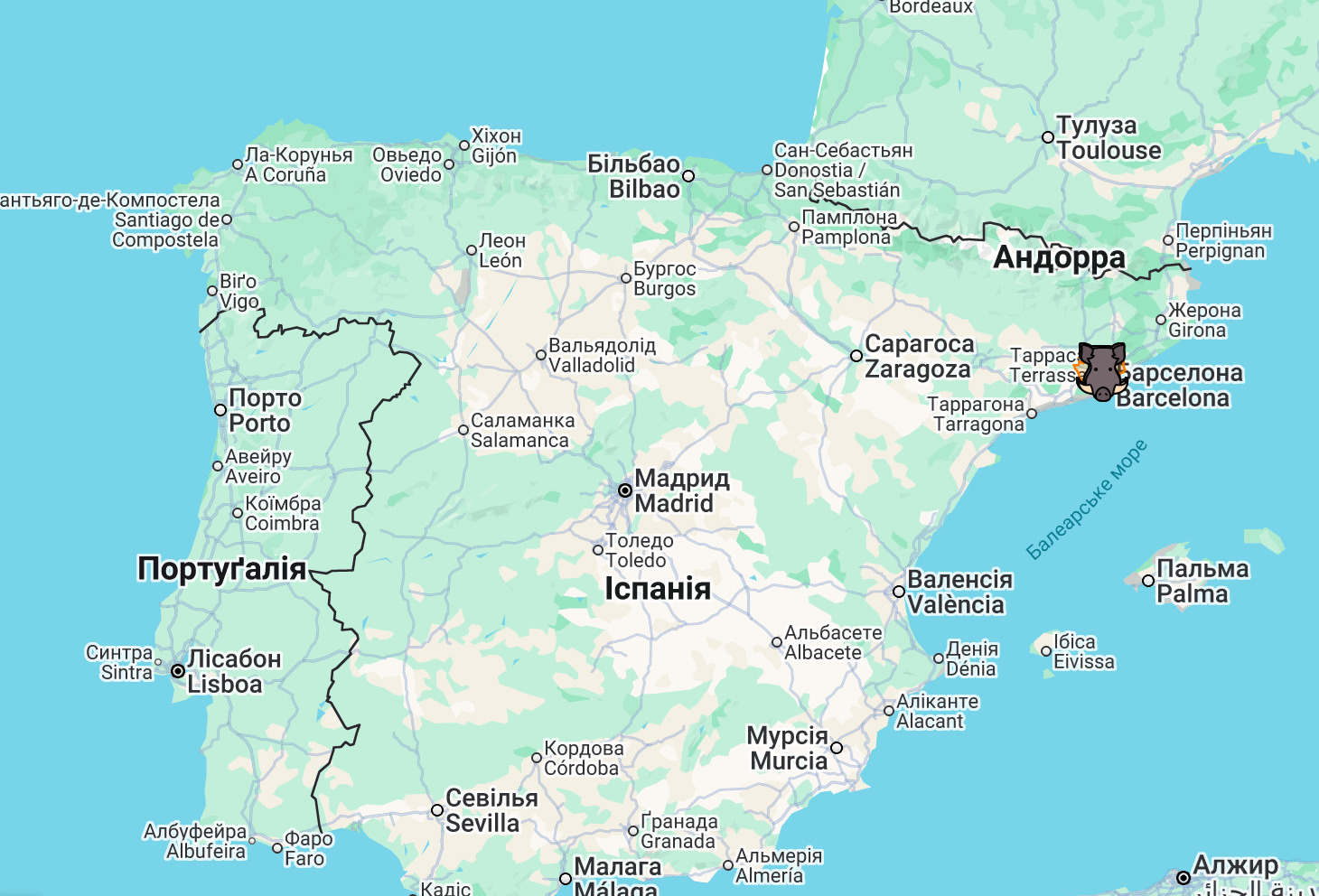
The three most recent carcasses were discovered on December 8, with the information made public on Friday, December 12. The first ASF cases in the region were detected on November 26. Based on experience from other European outbreaks, the spread of the virus currently appears relatively slow, giving grounds for cautious optimism that the outbreak could be contained at an early stage.
This assessment is shared by one of the leading ASF experts, Professor José Manuel Sánchez-Vizcaíno. In an interview with the Barcelona-based newspaper La Vanguardia, he expressed confidence in the authorities’ ability to control the situation:
“I am very confident that the situation can be brought under control without escalating. I know the system in Catalonia very well, as well as the people working there — they are highly competent professionals. That is why I believe the spread of the virus can be stopped.”
At the same time, debate continues regarding the origin of the virus. Professor Sánchez-Vizcaíno has once again emphasized that, in his view, the ASF strain detected is not natural to the region and was not circulating in any of the affected countries. According to him, the only logical explanation is a laboratory escape.
“This is a strain that was not circulating in any of the affected countries, so it could only have come from one source — a laboratory. Regarding CReSA, from the outset there has been a tendency to consider it the closest location to the origin, which is why many people believe the virus may have come from there,” the expert noted.
Against the backdrop of a stabilising epizootic situation, the government of the autonomous community of Catalonia has begun to gradually ease restrictions. In particular, in the second containment perimeter — the area between 6 and 20 km from the outbreak epicentre — the ban on access to natural areas is being lifted. However, strict restrictions will remain in place within a 6-km radius of the original infection site.
This decision means that residents of around 70 municipalities will once again be allowed to access natural areas, go for walks and engage in outdoor sports and exercise. This was reported by the Spanish newspaper El País.
At the same time, veterinary surveillance, biosecurity measures and monitoring of wild fauna remain intensified. Authorities stress that the coming weeks will be critical to definitively confirm that the ASF outbreak has been successfully contained and prevented from spreading to commercial pig farms.
PigUA.info based on materials from pigprogress.net