
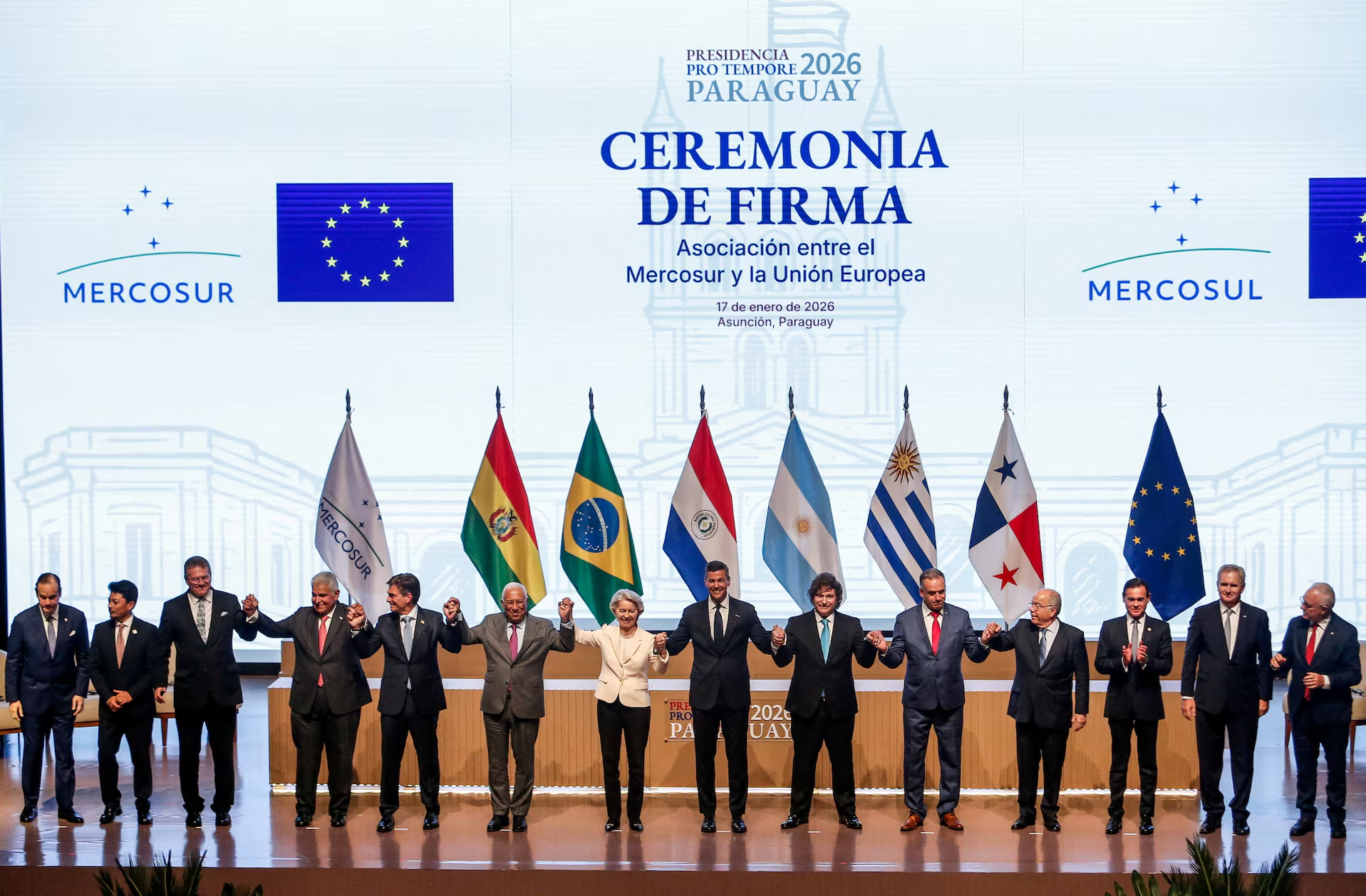
The signing ceremony took place in Asunción, Paraguay, with the participation of European Commission President Ursula von der Leyen and European Council President António Costa, as well as the leaders of Mercosur countries — Argentina, Paraguay, and Uruguay. Brazil was represented by its foreign minister, as President Luiz Inácio Lula da Silva did not attend in person.
Within the EU, the agreement was backed by a majority of member states last week, despite concerns voiced by farmers’ organisations and environmental groups. Critics fear a surge in imports of cheaper agricultural products from South America and a potential increase in deforestation.
Ursula von der Leyen called the agreement “a very strong message to the world” and stressed that the parties are choosing “fair trade over tariffs” and “a long-term partnership over isolation.” António Costa, in turn, said the deal would help both blocs navigate an increasingly unstable geopolitical environment and strengthen economic security.
Mercosur represents a market of around 700 million people, and trade between the EU and the bloc’s countries reached €111 billion in 2024. EU exports mainly consist of machinery, chemical products and transport equipment, while Mercosur exports are concentrated in agricultural goods, minerals, wood pulp and paper.
PigUA.info, based on Reuters