


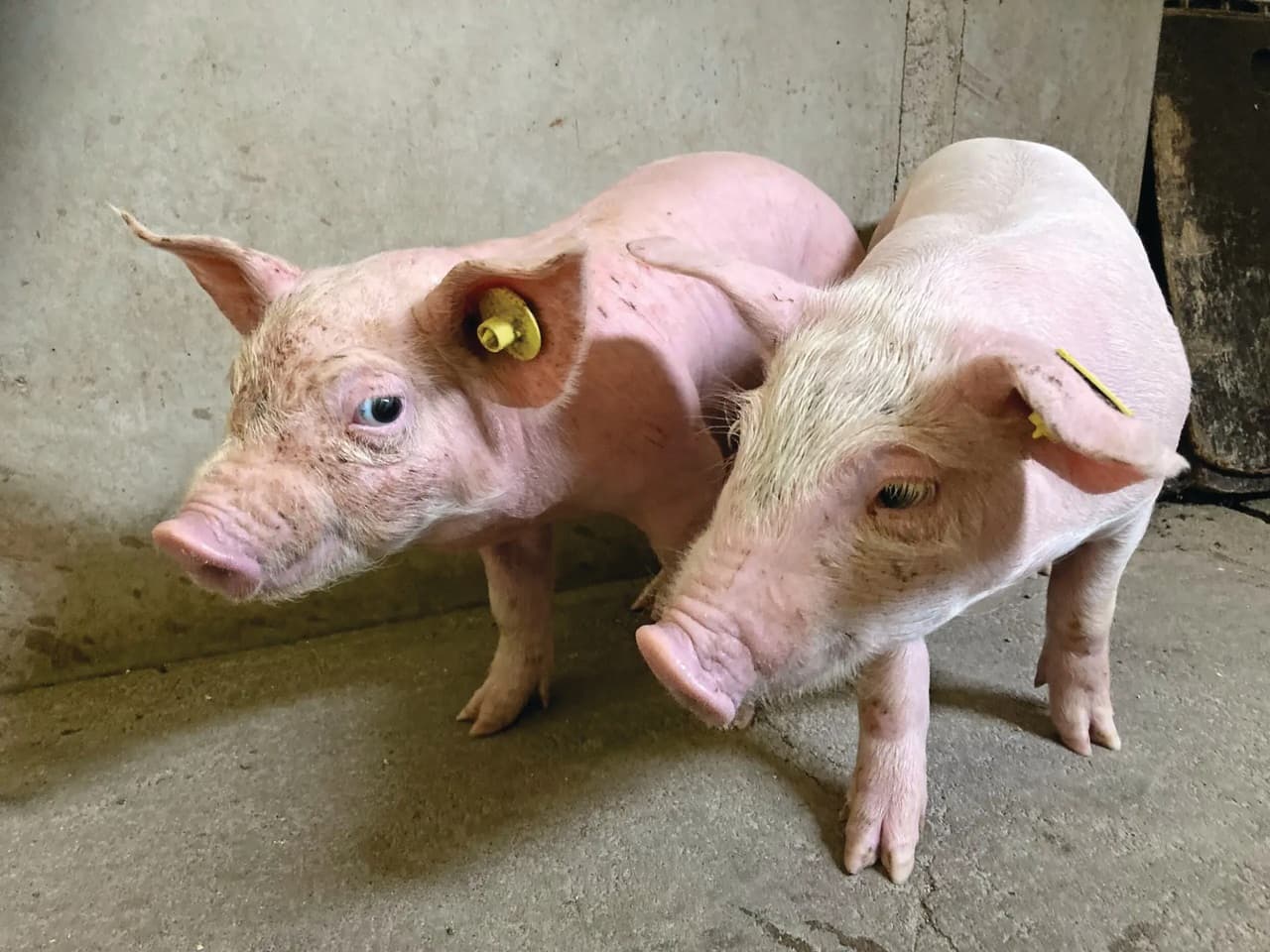
The most detailed case outside the Netherlands has been described in Denmark. In June 2026, researchers from the University of Copenhagen, Kjellerup Veterinary Laboratory and the Porcus veterinary practice confirmed the syndrome and the associated parvovirus variant on a farm with 920 sows.
According to the researchers, characteristic clinical signs were observed in 1.5–2% of suckling and weaned piglets. Six piglets aged one to two weeks were submitted for post-mortem examination.
The syndrome was first described in late 2024 following the appearance of unusual symptoms on Dutch pig farms. Affected piglets showed exophthalmos, or protruding eyeballs, mild strabismus, reddened and wrinkled skin, and hair loss. Mortality nevertheless remained relatively low.
Experts have linked the syndrome to a parvovirus variant previously detected in fox faeces. During the European Symposium of Porcine Health Management in Florence, Royal GD Animal Health researcher Dr Tijs Tobias reported that clinical signs were being observed on a growing number of farms. Preliminary estimates suggest that the syndrome may be present on around 80% of pig farms in the Netherlands.
Genetic analysis showed that the Danish virus strain is highly similar to the strain circulating in the Netherlands. The virus was also detected in two of 80 spleen samples collected from Danish foxes, while it was not found in a range of other mammalian species.
According to the researchers, detection of the virus in fox spleens indicates that it can infect and replicate in this species. However, its pathogenic significance for wildlife has not yet been established.
The scientists also noted that the strains detected on pig farms in the Netherlands and Denmark were more closely related to each other than to viruses found in local wildlife. This may indicate an epidemiological link between the farm cases, a single introduction of the virus into pigs and its subsequent spread across several countries.
According to Royal GD Animal Health, both the syndrome and the parvovirus have also been confirmed on pig farms in Belgium and Germany. PathoSense Diagnostics reported that the virus had also been detected in Spain, although no information is currently available on clinical signs of the syndrome in that country.
Experts are continuing to investigate the pathogen’s transmission routes, prevalence, effects on animal performance and the possible role of wildlife in its circulation.
PigUA.info, based on materials from foodagribusiness.world