
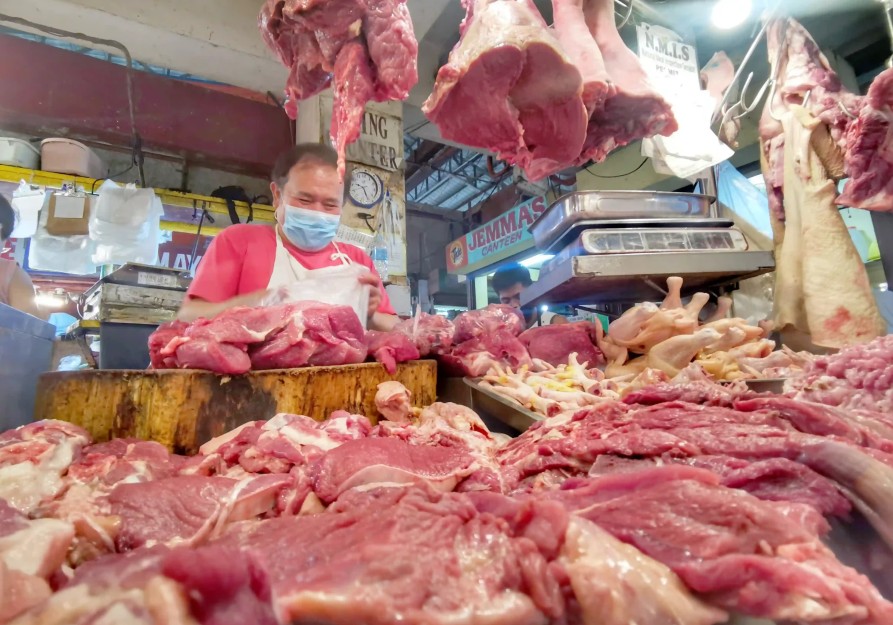
Agriculture Secretary Francisco Tiu Laurel Jr. said the government is considering quantitative restrictions after internal assessments showed that pork imports had not reached the trigger price that would allow safeguard duties to be imposed automatically.
The issuance of new SPSICs — sanitary and phytosanitary import clearances — is expected to be suspended in early November. However, consignments that have already been contracted and shipped will still be allowed to enter the country to avoid business disruptions.
The restrictions could apply to pork bellies, other pork cuts, whole carcases and pork jowls.
The department does not expect pork shortages during the holiday season. According to Tiu Laurel, the country currently has stocks equivalent to around 170 days of consumption.
At the same time, the department has two applications pending before the Tariff Commission: one seeking the restoration of previous tariff rates on imported pork and another requesting a review of the classification and tariff rates applied to pork jowls.
In addition, the Philippines has opened applications under the Minimum Access Volume (MAV) scheme for 2027. The pork quota has been set at 55,000 tonnes. Applications will be accepted from 2 to 30 November 2026.
PigUA.info, based on materials from businessmirror.com.ph