


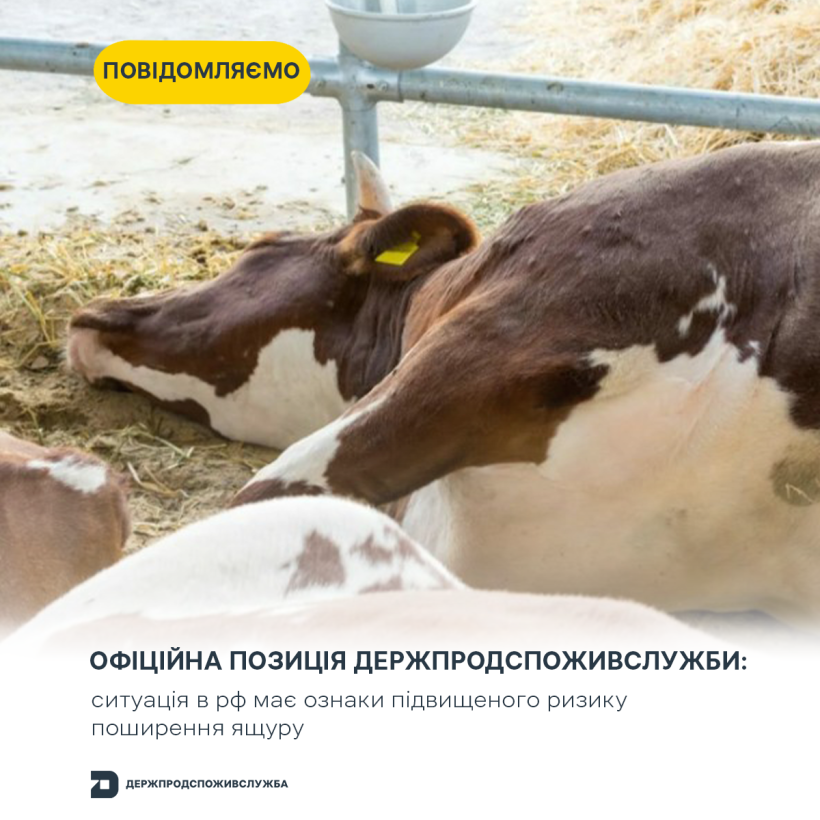
According to the Service, analysis of international sources, including references to data from the United States Department of Agriculture (USDA), indicates large-scale culling and disposal of livestock in several regions of russia. Experts note that the nature of these measures is more consistent with standard FMD response protocols than with the diseases officially reported.
At the same time, russian authorities deny the presence of FMD, attributing the situation to outbreaks of pasteurellosis and rabies, and even claiming “mutations” of these diseases. However, experts stress that such claims are not supported by global veterinary practice, while the scale of quarantine restrictions and mass culling is atypical for these diseases.
The State Service also highlights that the available evidence may indicate a potential spread of FMD in Siberian regions and adjacent territories, with the number of potentially affected areas increasing.
It is further emphasized that, as a member of the World Trade Organization, the russian federation is obliged to promptly inform the international community about confirmed FMD cases in accordance with the requirements of the World Organisation for Animal Health (WOAH). As of now, no official notifications have been issued.
Ukraine, for its part, maintains its status as an FMD-free country without vaccination, which is critically important for stable exports and international trade. The State Service continues continuous monitoring of the situation, with particular focus on border and frontline regions, where the risks of disease introduction remain elevated.