


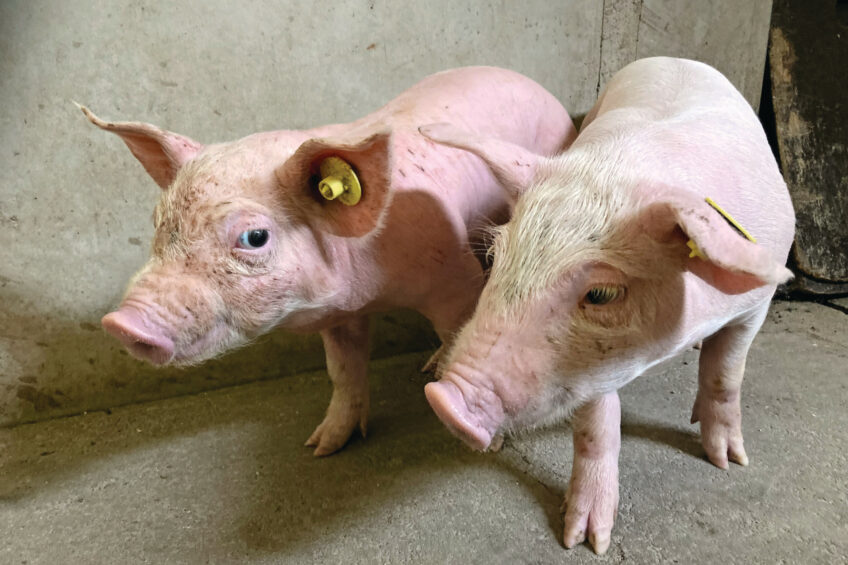
The syndrome was first reported by the Netherlands Animal Health Service (Royal GD) in mid-2025. However, cases had already been observed since late 2024. At that time, the condition had been detected on approximately 50 pig farms.
The main clinical signs include exophthalmos (bulging eyeballs), erythema (skin redness), and alopecia (hair loss). Many affected pigs also exhibit wrinkled skin, thickening of the neck, and strabismus (crossed eyes). In some cases, only one eye is affected, although both eyes are more commonly involved.
According to veterinary observations, the syndrome can affect up to 80% of piglets in half of the litters on a farm at the same time, although the severity and prevalence vary considerably between herds.
The disease can occur in pigs of all ages, but young piglets appear to be the most susceptible. Affected animals often show impaired growth and may weigh approximately 2 kg less than healthy counterparts by 10 weeks of age.
Outbreaks typically last between three and six months, with an average duration of around four months.
Although direct mortality remains low, the syndrome can lead to several production-related problems, including post-weaning diarrhea, reduced uniformity within groups, and an increased number of pigs of lower market quality.
Researchers have not yet fully explained the mechanism behind the clinical signs, but growing evidence suggests a strong association between the syndrome and a novel parvovirus variant.
Viral DNA has been detected in various organs of affected pigs, although no consistent pathological lesions have yet been identified. Further research is ongoing to clarify the virus’s role and pathogenesis.
Scientists are particularly interested in the fact that a very similar virus strain was described in 2012 after being detected in fox feces. However, researchers believe foxes are unlikely to be the natural reservoir of the virus.
Royal GD experts are encouraging veterinarians across Europe to remain alert for similar clinical signs in pigs. Researchers consider it unlikely that the virus is circulating exclusively in the Netherlands and suggest that cases may have gone unnoticed due to limited awareness of the syndrome’s characteristic symptoms.
PigUA.info, based on materials from pigprogress.net