

In Belgium, the Federal Agency for the Safety of the Food Chain (FASFC) clarified at the end of October that producers are no longer allowed to castrate piglets themselves. Violations of this ban are punishable.
The clarification followed a ruling by Belgium’s Council of State on 19 October, which annulled the Royal Decree of 19 April 2023. That decree had allowed farmers to perform surgical castration themselves on piglets up to seven days old.
Following the court ruling, some industry organisations suggested that the previous practice, under which farmers could castrate young piglets without anaesthesia, might temporarily become applicable again. However, FASFC stated that this interpretation was incorrect.
At the same time, uncertainty remains within the sector over future practice. Farmers’ organisation Boerenbond is calling for a new Royal Decree that would clearly regulate the procedure. Veterinarians, meanwhile, say they do not have sufficient time or resources to carry out all castrations themselves.
Netherlands Tightens Enforcement of Tail-Docking Rules
At the end of October, the Netherlands’ Trade and Industry Appeals Tribunal ruled that the Food and Consumer Product Safety Authority must monitor and enforce compliance with existing legislation on tail docking in pigs.
The case was initiated by an animal welfare organisation and concerned practices at three pig farms.
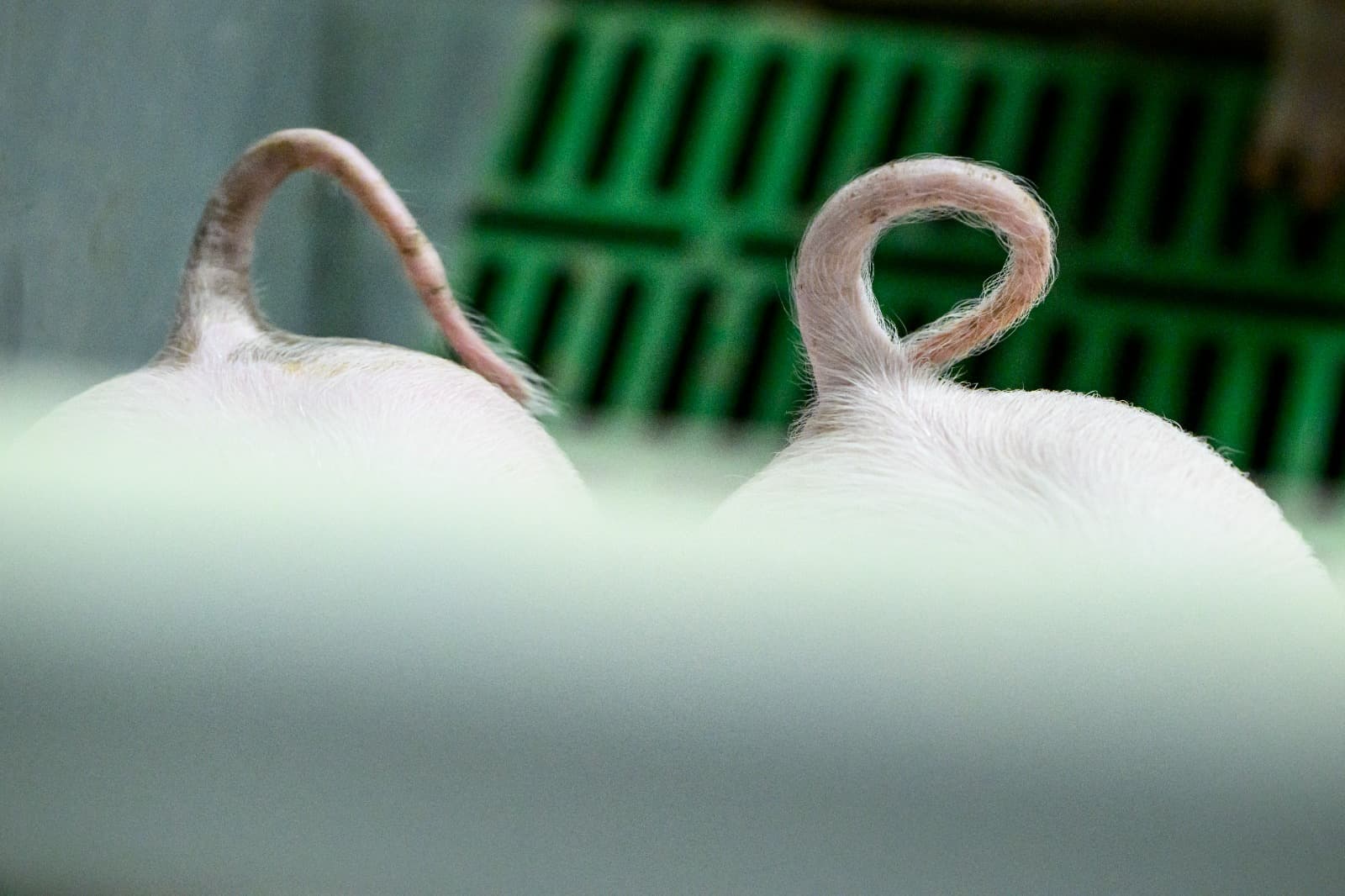
Tail docking is formally prohibited in both the EU and the Netherlands, but may be allowed as an exception under certain conditions. In the Netherlands, in particular, it may be carried out on piglets up to five days old if tail-biting has already occurred on the farm and other measures have failed to resolve the problem.
The court ordered State Secretary Erkens to investigate whether the farms concerned had complied with these conditions. New decisions in the case must be issued within six months.
Pig producer organisation POV said that raising pigs with intact tails requires further accumulation of knowledge and changes in husbandry practices.
Tail docking is also included in the Netherlands’ long-term livestock development plan. Under an agreement on animal-friendly livestock production, the pig sector, animal welfare organisations and the Ministry of Agriculture have agreed to completely phase out tail docking by 2030.
PigUA.info, based on materials from foodagribusiness.world